

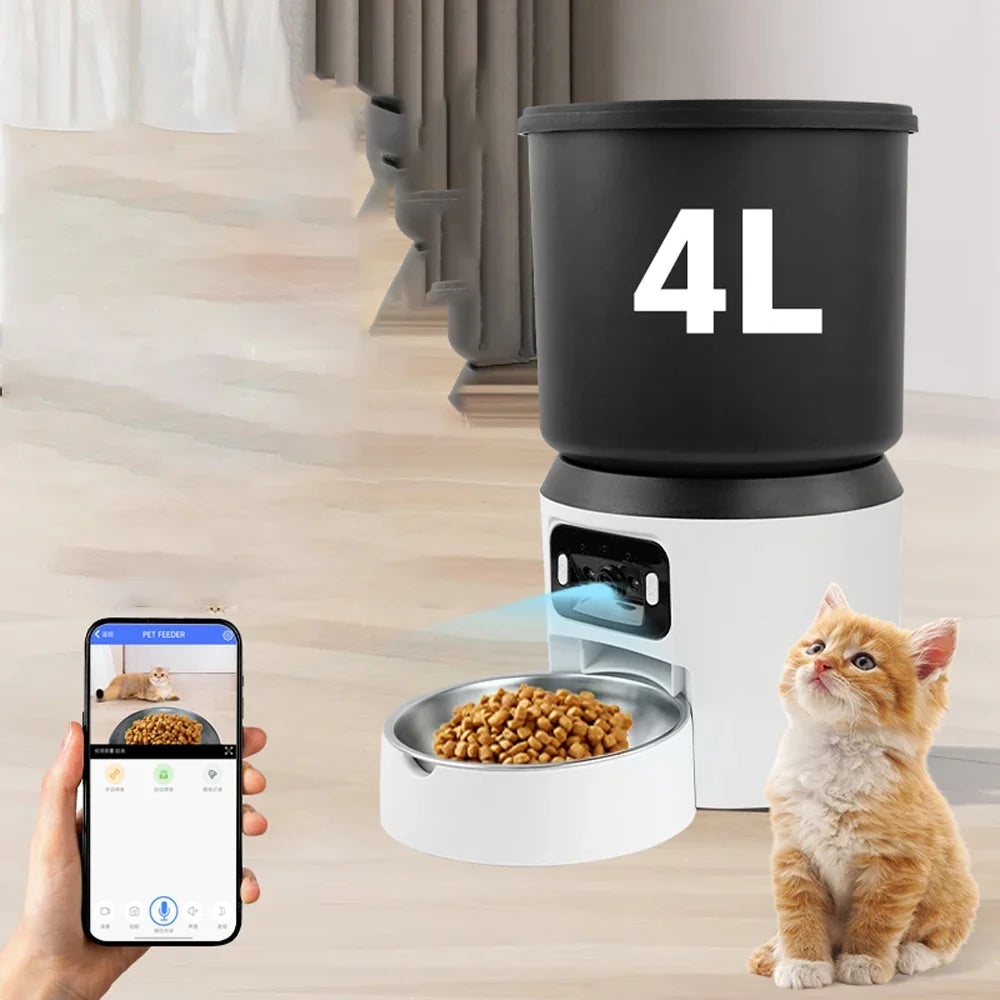
The biggest advantage of an automatic feeder is consistency. Instead of making the device the entire feeding plan, use it as one reliable part of a routine that still includes regular checks, cleaning, fresh water and normal interaction with your pet.
1. Start with the routine you already have
Before programming anything, write down the times you normally feed, the type of dry food used and how often you check the bowl and food storage. Automation works best when it supports an existing routine rather than creating a completely new one overnight.
If you are still deciding between control types, read our Automatic Pet Feeder Buying Guide first.
2. Introduce the feeder while you are present
Give your pet time to become familiar with the sound and movement of an automatic dispenser. Test the selected settings while you are home so you can verify that the food dispenses as expected and that your pet is comfortable approaching the bowl.
This also gives you a chance to confirm that the dry food you use moves through the feeder reliably.
3. Keep a manual check in the schedule
An automatic feeder should not become invisible once it is programmed. Build a quick daily check into your routine: confirm that food has moved through the dispenser, inspect the bowl, check the hopper and make sure the unit is functioning normally.
Connected controls can add convenience, but an app notification is not the same as physically checking the feeding area.
4. Treat fresh water as a separate essential
Automating dry-food dispensing does not change the need for reliable access to fresh water. Feeding and hydration should be planned separately, especially when your daily schedule changes.
For outdoor days and shorter trips with your dog, our existing guide What to Pack for a Dog Walk or Day Trip includes a practical checklist for carrying essentials.
5. Create a cleaning rhythm
Food-contact surfaces collect crumbs and residue over time. Follow the product and food instructions for cleaning, and make the task part of a recurring routine rather than waiting until the feeder looks dirty.
A simple system is to pair cleaning with another regular household task so it is harder to forget.
6. Choose the control style that fits your habits
The 4L Automatic Pet Feeder at Guanawear is offered in Button, Wi-Fi and Voice versions according to the supplier listing. The 4 L hopper is intended for compatible dry food.
A button version keeps the setup straightforward. Wi-Fi can suit people who prefer connected control. The Voice version should be chosen only after reviewing the specific voice functionality listed for that variant.
7. Have a backup plan
Any routine that depends on a device should include a simple backup. Know what you will do if power, connectivity or the feeder itself is unavailable. Keep the feeding instructions understandable to another person who may need to help.
A simple everyday checklist
- Confirm the feeder is operating normally.
- Check the bowl and food path.
- Keep fresh water available independently.
- Refill dry food according to your routine and storage guidance.
- Clean food-contact areas regularly.
- Review settings after schedule changes.
- Maintain normal supervision and interaction with your pet.
Automation should reduce friction, not attention
A good automatic-feeding routine is one you do not have to think about constantly—but still verify regularly. Used that way, a feeder can help make meal timing more predictable without replacing the human parts of everyday pet care.
Browse the Pet Essentials collection for feeding, travel and everyday pet accessories.


